



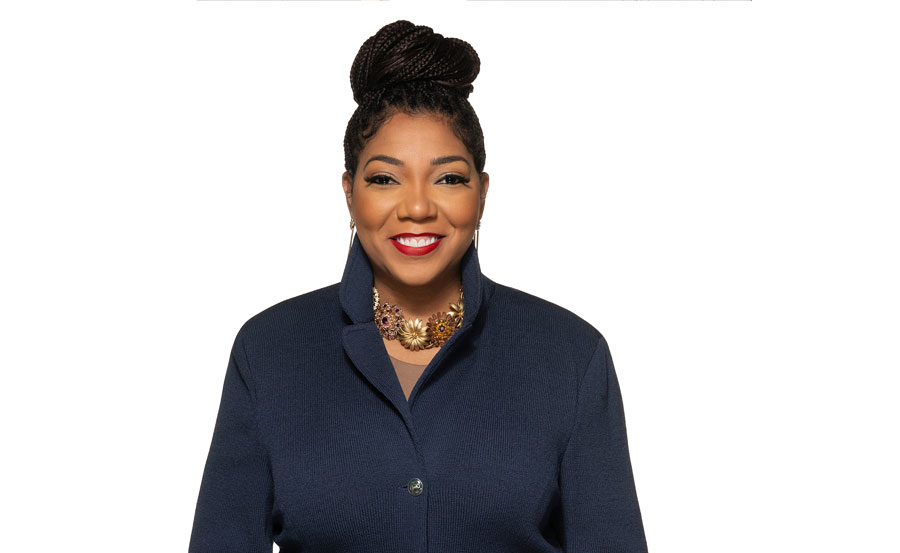

By Ashley L. Upkins, Esq.
president, National Bar Association
One hundred years is a remarkable milestone for any institution. For the National Bar Association, it represents something even greater. It marks a century of perseverance, leadership, advocacy, and an unwavering belief that the law can be one of our nation’s greatest instruments for justice.
As we conclude our Centennial year and gather for the National Bar Association’s 101st Annual Convention, we do so with an appreciation for the lawyers who came before us and an equally important responsibility to prepare those who will lead after us.
The National Bar Association was founded in 1925 during a time when Black attorneys were excluded from membership in the American Bar Association. Twelve lawyers came together with a simple but transformative vision: to create an organization where Black legal professionals could advance excellence in the practice of law while fighting for equal justice under the law.
 Over the next century, that vision became one of the most consequential legal movements in American history.
Members of the National Bar Association helped lay the legal foundation for the Civil Rights Movement. They challenged segregation, advanced voting rights, strengthened constitutional protections, expanded access to education, and helped shape generations of lawyers, judges, elected officials, and legal scholars. Throughout our history, NBA members have argued landmark cases, served at every level of government, advised presidents and Fortune 500 companies, presided over courtrooms, taught future attorneys, and stood alongside communities during some of our nation’s most defining moments.
The story of the National Bar Association has never been simply about lawyers.
It has always been about leadership. That is why our return to Nashville carries such significance.
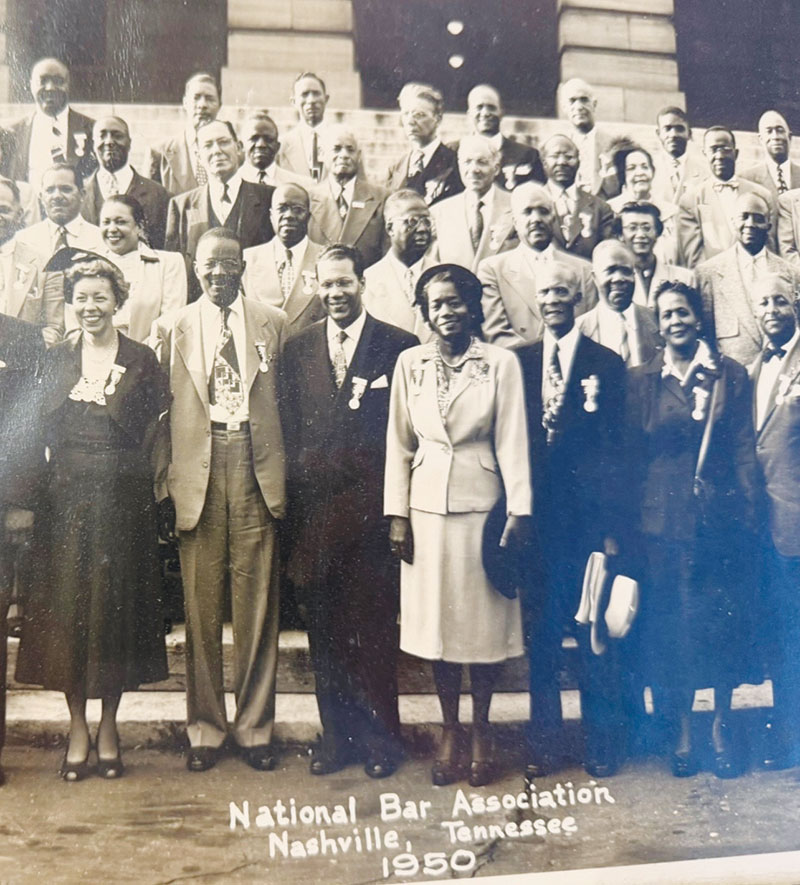
The last time the National Bar Association held its Annual Convention in Nashville was 1950.
America was a very different nation. Brown v. Board of Education had not yet been decided. The Civil Rights Act and Voting Rights Act were still years away. Many of the freedoms and opportunities we now recognize as fundamental remained aspirations rather than realities.
Today, seventy-six years later, we return to a city that helped redefine the American Civil Rights Movement.
Nashville occupies a singular place in our nation’s history. From the courageous students who organized the Nashville sit-ins to the enduring influence of Fisk University, Tennessee State University, Meharry Medical College, and the historic Jefferson Street corridor, this city has produced leaders whose impact has extended far beyond Tennessee. Nashville has long demonstrated that meaningful change begins when courageous people are willing to organize, lead, and act.
There is perhaps no more appropriate place for the National Bar Association to begin its second century.
For me, this moment carries special meaning. As a Tennessee lawyer and the first Tennessean to serve as President of the National Bar Association, welcoming our Association back to Nashville is both a tremendous honor and a reminder that every generation has a responsibility to leave the profession stronger than it found it.
This year’s convention reflects both our history and our future.
Throughout the week, attorneys, judges, law professors, corporate counsel, law students, policymakers, and community leaders will engage in conversations examining artificial intelligence and the future of legal practice, corporate governance, judicial leadership, workforce transformation, civil rights, democracy, ethics, economic opportunity, and emerging areas of law including music, sports, entertainment, and Name, Image and Likeness (NIL). As technology transforms nearly every profession, lawyers will play an increasingly important role in helping businesses, governments, and communities navigate the legal and ethical questions that accompany innovation.
At the same time, our convention remains grounded in the values that have always defined this Association.
The Arthenia Joyner Prayer Breakfast, featuring gospel legend Shirley Caesar and Bishop Vashti Murphy McKenzie, reminds us that leadership requires both conviction and service. Our Corporate Counsel Leadership Summit brings together executives navigating increasingly complex legal and business environments. The 40 Under 40 Awards celebrate emerging leaders who are already transforming the profession, while the Youth Enrichment Program reflects our enduring investment in those who will one day carry this work forward.
One of the conversations I am especially looking forward to features actor, author, and advocate Dondré Whitfield, whose discussion, “Black Male vs. Black Man,” challenges us to think more deeply about identity, responsibility, mentorship, and what it means to lead with purpose. These are conversations that extend well beyond the legal profession because they ultimately shape families, communities, and the next generation of leaders.
We are also honored to welcome Vice President Kamala D. Harris for a featured lawyer-to-lawyer conversation during the convention. Vice President Harris has made history throughout her career as the first woman, the first Black American, and the first South Asian American elected Vice President of the United States. Before serving in our nation’s second-highest office, she built a distinguished legal career as a prosecutor, Attorney General of California, and United States Senator. Her presence at the National Bar Association reflects more than the significance of this year’s convention. It recognizes the enduring role lawyers play in strengthening democratic institutions, protecting constitutional principles, and expanding opportunity through public service.
The National Bar Association has always believed that excellence in the law carries with it a responsibility to serve.
That responsibility extends beyond courtrooms and boardrooms. It includes mentoring young lawyers, strengthening our communities, protecting civil rights, advancing economic opportunity, and ensuring that justice remains accessible to every American.
As we begin our next century, those responsibilities have not diminished. They have grown.
I invite Tennessee’s legal community, business leaders, educators, students, civic organizations, and families to join us as we write the next chapter in the National Bar Association’s remarkable history.
The conversations taking place in Nashville will not end when the convention concludes. They will continue in courtrooms, classrooms, corporate boardrooms, legislatures, and communities across our nation.
One hundred years ago, twelve lawyers came together believing they could build an institution that would strengthen both the legal profession and our country.
This July, as we gather in Nashville, we celebrate what they built while preparing for the work that still lies ahead.
The next chapter begins here.
