


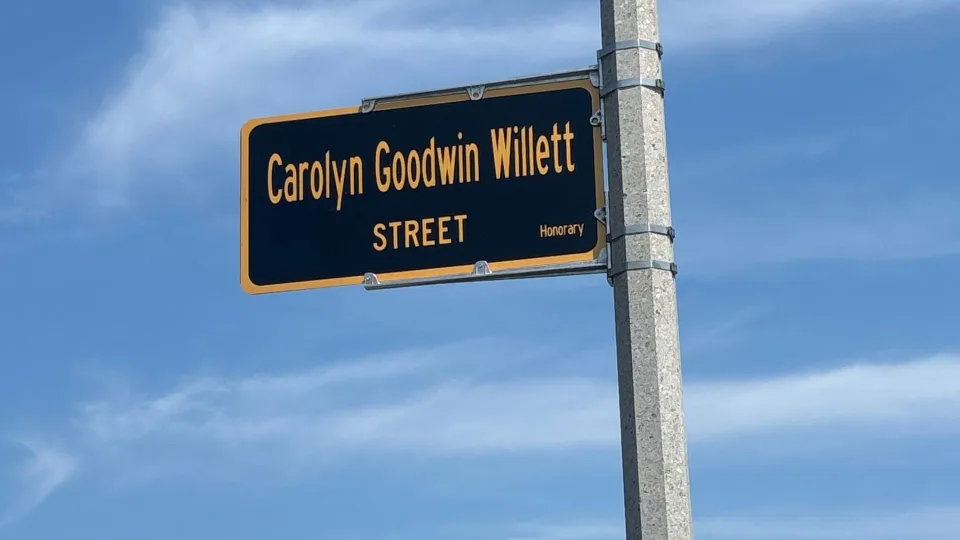
MEMPHIS, TN — More than five decades of civil rights activism, child advocacy and neighborhood leadership were recognized Saturday as Memphis honored longtime community leader Carolyn Goodwin Willett with an honorary street designation in the Castalia Magnolia community where she grew up.
City leaders, family members, friends and neighbors gathered at Castalia Street and Lamar Avenue for a ceremony recognizing Willett’s decades of service. The Memphis City Council approved an honorary street name for Castalia Street between Lamar Avenue and South Parkway East, with Council Chairwoman Jana Swearengen-Washington sponsoring the resolution.
The recognition reflects a lifetime of work that began with Willett’s involvement in the Memphis civil rights movement as a student at what was then Memphis State University. In 1969, she was among 109 Black students arrested during a sit-in protesting conditions and demanding greater inclusion at the university.
Willett was a member of the Black Student Association, which pushed for changes including increased Black representation among faculty and administrators. The 1969 protests helped open doors at the university and became an important chapter in Memphis’ civil rights history. Willett later returned to the institution, now the University of Memphis, where she earned a master’s degree.
Her commitment to the community continued long after her student activism. Willett worked as a social worker and advocate for children and families, including efforts involving families in crisis and youth drug prevention.
In 1994, Willett and her mother, the late Florine Hinds, founded Kiddie Kollege Child Care Center. The center began with nine children and eventually expanded to serve as many as 180 children across two shifts. Hinds, who died in 2014, was also a longtime Memphis community leader and the owner of Kiddie Kollege.
Willett’s community involvement has extended into neighborhood development, education and civic affairs. She has served as a leader of the Castalia Magnolia Community Association and has advocated for issues affecting residents, including housing, food access and education. Her public service also includes an appointment to the Memphis Board of Ethics, where she continues to serve.
The honorary street designation places Willett’s name permanently within the neighborhood that has been central to her life and community work. The recognition also connects her civil rights activism with her decades of investment in Memphis children, families and residents.
For Willett, the honor represents more than personal recognition. It serves as a reminder of the importance of continuing to strengthen neighborhoods, support young people and encourage residents to work together.
Her legacy now has a permanent place on a Memphis street, marking more than 50 years of service to the city and the Castalia Magnolia community.
Copyright©️ The Tennessee Tribune 2026. All rights reserved.
