


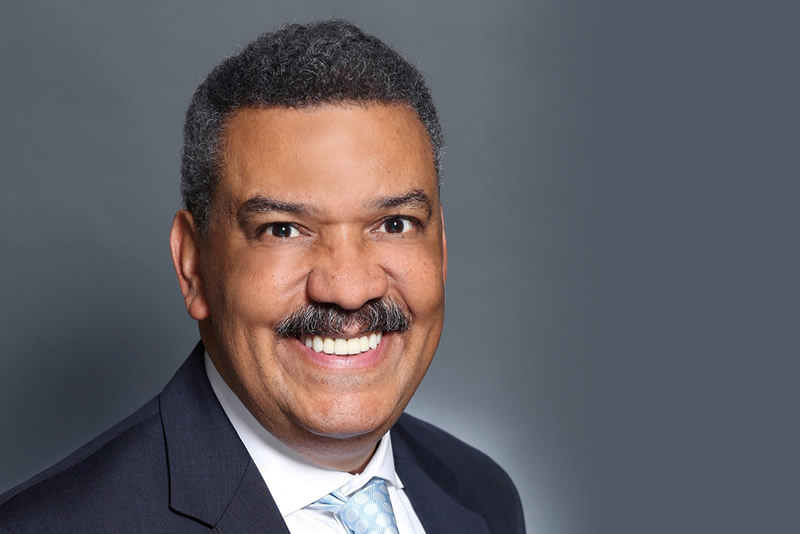
NASHVILLE, TN — Charles K. Grant, one of Nashville’s most accomplished trial lawyers, has spent his career turning that skill toward equal justice. As a result of his decades of pro-bono work, Grant is being inducted into the Legal Aid Society of Middle Tennessee and the Cumberlands’ inaugural Circle of Justice.
The Circle of Justice is the Legal Aid Society’s highest honor. The award recognizes leaders whose service has helped keep justice within reach of the people across Middle Tennessee and the Cumberlands. It is described as a circle, not a pedestal. Each honoree joins the thousands of staff, volunteers, and supporters who have made free civil legal help possible across 48 counties for more than 56 years.
“It’s a truly great honor,” Grant who has been the recipient of several prestigious awards, told The Tennessee Tribune. His Lifetime commitment to pro bono legal work in Civil Rights centers on helping former offenders regain the right to vote.
“One in five adult Blacks in Tennessee cannot vote due to former offender status,” Grant explained. “When people hear that they’re like, oh, that’s not that important, but when you realize the percentage of the Black population. I hope can’t vote because they have a felony conviction and have to be restored in order to vote, and the process of getting them restored, regaining that franchise can be a bit confusing and convoluted… We’ve got about 450,000 Tennesseans who can’t vote including Black folks, white folks and Hispanics. That’s why the work is especially important.”

Grant said the disenfranchisement of Black citizens is policy. “First of all, the fact that you have been convicted of a crime that almost never has anything to do with voting, or citizenship. Black people get arrested and charged with felonies at a higher rate, and it’s been shown time and time again, disproportionately charged. Okay, we’re disproportionately charged with felonies, which was part of the design of our criminal justice system, after the Civil War. What happened was all of these serious crimes that at common law were misdemeanors, became felonies, right? And those were used to do two things. One is to rob us of the franchise and diminish our impact at the ballot box and two to reestablish free labor inside the prison system.”
Grant recalled that as a young attorney learning about voter disenfranchisement and how it impacted the Black community and decided to do something. “In the mid-nineties, I didn’t know that you could lose your right to vote. We never ran across that in-law school. I was able to help a gentleman get his voting rights back. And so from time to time, I would get these cases, and then it just dawned on me, well, you know how much of our community is impacted by this? And I was shocked at that. And so, I started doing large workshops.”
Grant is a past president of the Nashville Bar Association. He is a Mid-South Super Lawyer and is a shareholder at Baker, Donelson. He has tried scores of jury trials to verdict in federal and state courts. Grant has been the recipient of several prestigious awards, including the Napier-Looby Bar Foundation’s Trailblazer and A.A. Birch Outstanding Public Service awards, the Nashville Bar Association’s Pro Bono Lawyer of the Year Award, the Tennessee Bar Association’s Harris Gilbert Pro Bono Award and the ACLU of Tennessee’s Bruce Kramer Cooperating Attorney Award.
