


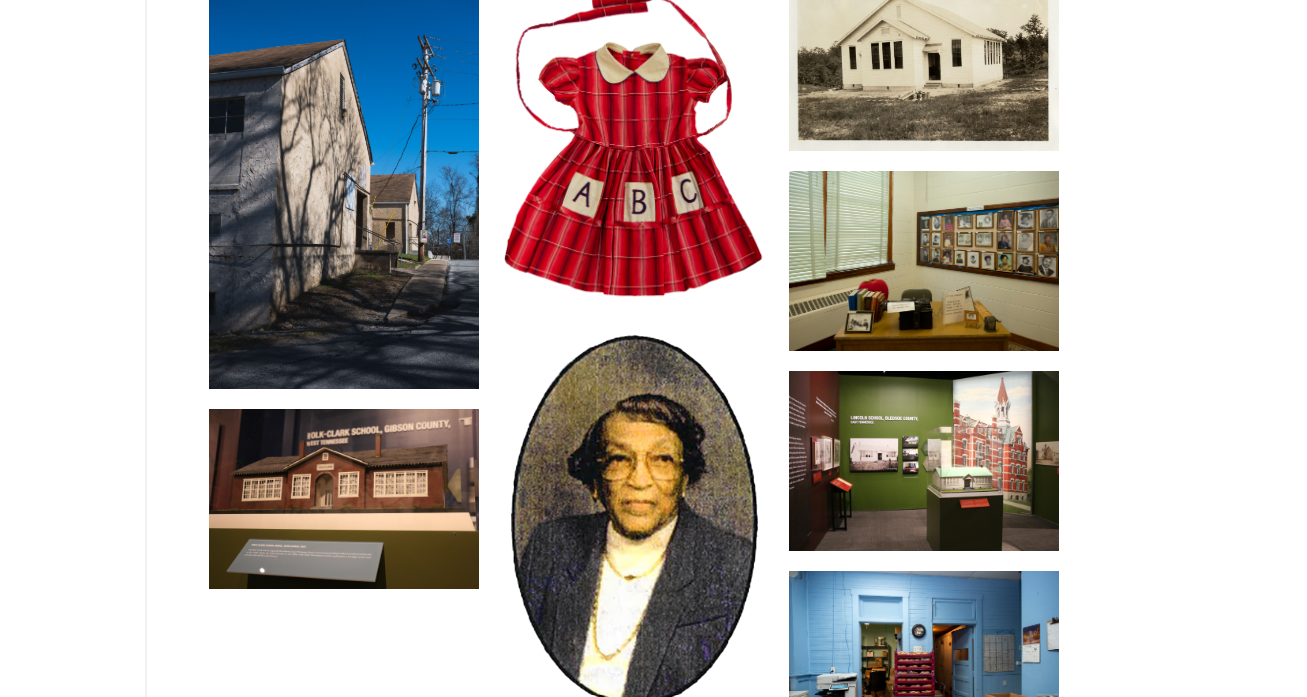

CHARLOTTE, TN – Promise Land Heritage Association presents Building a Bright Future: Black Communities and Rosenwald Schools in Tennessee, a new traveling exhibition, on display 02-OCT-2026 through 02-NOV-2026. Created by the Tennessee State Museum in partnership with The John Hope and Aurelia E. Franklin Library at Fisk University, the exhibition traces the history of education for Black Tennesseans from the Reconstruction period, through the development of the Rosenwald program, and into the present day.
“I’m particularly excited about this exhibit because it gives us an opportunity to showcase the history of the Dickson County Training School, which later became Hampton School. Hampton opened around 1922 and was the only Rosenwald School in Dickson County. Through this exhibit, visitors will have the opportunity to learn more about Hampton’s important role in the education and history of African American students in Dickson County. At the Promise Land Historic Site, we will also provide additional information about Hampton and its connection to our community’s story,” said Serina Gilbert, PLHA Board Chair.
What are commonly referred to as Rosenwald Schools were the result of an initial partnership between Sears, Roebuck, and Co. president Julius Rosenwald, Tuskegee Institute president Booker T. Washington, and Black Communities throughout the South. Between 1912-1937, that partnership resulted in the construction of almost 5,000 schools for Black children across 15 southern states, including 354 in Tennessee. Rosenwald schools drove improvement in Black educational attainment and helped educate the generation who became leaders of the Civil Rights movement. The traveling exhibition on display at Promise Land’s St. John Cultural Arts Center consists of five two-sided panels and includes the engaging stories of alumni and community members from 16 different Rosenwald Schools in Tennessee, including Dickson County’s Hampton School.

“TSM and Fisk wanted to build a more diverse and inclusive space for all Tennesseans to learn about and honor the history and legacy of Black education in the state,” said Debbie Shaw, Senior Curator of Archaeology at the Tennessee State Museum. “The resilience and perseverance of these Black communities as they strived for equal access to education is highlighted through their work with the Rosenwald School program. The legacy continues today as members from these same groups work toward the preservation of these schools and communities.”
“Our teams at the Fisk University John Hope and Aurelia E. Franklin Library and the Forging Future Pathways Forward: Building a Portal to Rosenwald Collections for all at Fisk University project were thrilled to partner and collaborate with Tennessee State Museum,” said DeLisa M. Harris, Director of Library Services at Fisk University. “This exhibit is the first major showcase of the impact and legacy of the Julius Rosenwald Fund Rural School program in Tennessee.”
This traveling exhibit is an expansion of Building a Bright Future: Black Communities and Rosenwald Schools in Tennessee, an initiative that included a 4,000 square foot temporary exhibit at the Tennessee State Museum and a two-day symposium. The project won a 2024 American Association for State and Local History (AASLH) Leadership in History Award of Excellence and the 2024 Tennessee Association of Museums President’s Award. For more information visit: Building a Bright Future.
