




Two hundred and fifty years ago, America made a promise that it’s still working to keep. When it declared itself a sovereign nation in 1776, it also claimed to “derive its power from the consent of the governed.”
Today that promise remains broken and lies in ruins, failing communities across the country. Our Black and Brown communities live in constant terror – whether it’s watching their rights stripped piece by piece in front of their eyes, or being unable to leave their home because of the fear of being ripped away from their families to be forced into detention camps. And still, the millions of Americans of marginalized identities continue to be systematically excluded from decisions that shape their everyday lives.
The promise of an American democracy has never been fully realized.
Local elected officials have always been the champions their communities can count on. In these historic times, we’re leading the change our communities need. And through collaboration, we can do more than rebuild here at home – we can ignite change across the entire nation.
The question is not whether we can rebuild, but how? We start with co-governance, where we break down the barriers between us and our communities, center individuals who have historically been excluded, and build authentic partnerships that drive transformational change.
Given the state of the country, we’ve lost this. Rightfully so, Americans have begun to lose trust in the government, with only 17% trusting the federal government to do what is right, compared to 73% in the 1960s. As trust continues to sever between constituents and the government, restoring trust has become critical and requires necessary action.
As electeds, we need to create a pathway for shared decision-making between the government and the people it serves. This goes beyond yet another task force that looks good on paper or drafting policies that fail to consider the diverse lived experiences of all community members. We need to empower individuals to co-create viable solutions that demonstrate the positive outcomes of collaboration.
For example, here in Nashville, Tennessee, local youth advocates and local electeds strategically used co-governance to co-create the nation’s first Office of Youth Safety, in direct response to the rising threat of gun violence.
Leading with the spirit of collaboration, centering the voices of those directly impacted and mutual accountability between movement partners and local electeds, we were triumphant. The Southern Movement Committee organized youth-based townhalls and people’s movement assemblies to hear directly from the people about what they needed, not the other way around.

Despite the contentious history and mistrust, committee members and I met often, which allowed us to wield our collective voice to organize, mobilize the youth to share powerful testimony, engage other electeds, and secure $1 million in funding to create the first office of its kind.
I saw firsthand what happens when we work as a unit and build the community we deserve together. We get to rebuild our community while cultivating a world in which we all feel seen, heard, and respected by the same systems meant to serve us.
Too often, governments use words like “collaboration” or “for the people” while keeping power firmly in their own hands. The results? Empty task forces, community meetings with zero accountability, and policies that don’t materialize.
BIPOC communities, in particular, feel the brunt of this, and our skepticism is valid. As a Black woman and Co-Chair of the Local Progress Black Caucus, I know co-governance isn’t a new idea for our communities, but systemic racism has silenced and barred us from being co-creators of policies that keep us safe, our families fed, our children’s future intact, and our communities thriving. The difference now is we’re choosing to govern, not be governed.
Beyond corrective justice, co-governance is smart justice. When people work together in unity, the benefits are felt widely. We come to understand that not only are our struggles connected, but so is our joy, building prosperous, thriving communities.
Nashville isn’t an outlier, it’s continued proof that collaborative governance will consistently deliver better outcomes, stronger communities, and durable local governments for all. Every city has its own version of the Southern Movement Committee – a group of young people, neighbors, and organizers who know exactly what their communities need and are willing to work towards it.
With collaborative governance in our pocket, the next two hundred and fifty years of American democracy won’t be defined by Washington. It’ll be up to us, as local leaders, to be bold enough to build and wield power together, do the hard work, and have the hard conversations rooted in our commitment to our people and our communities, and to build a strong, participatory democracy for all.
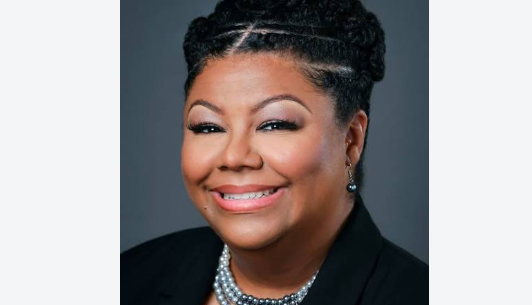
Delishia Porterfield is Local Progress Black Caucus Co-Chair & Council Member
At-Large in Nashville, TN.
