


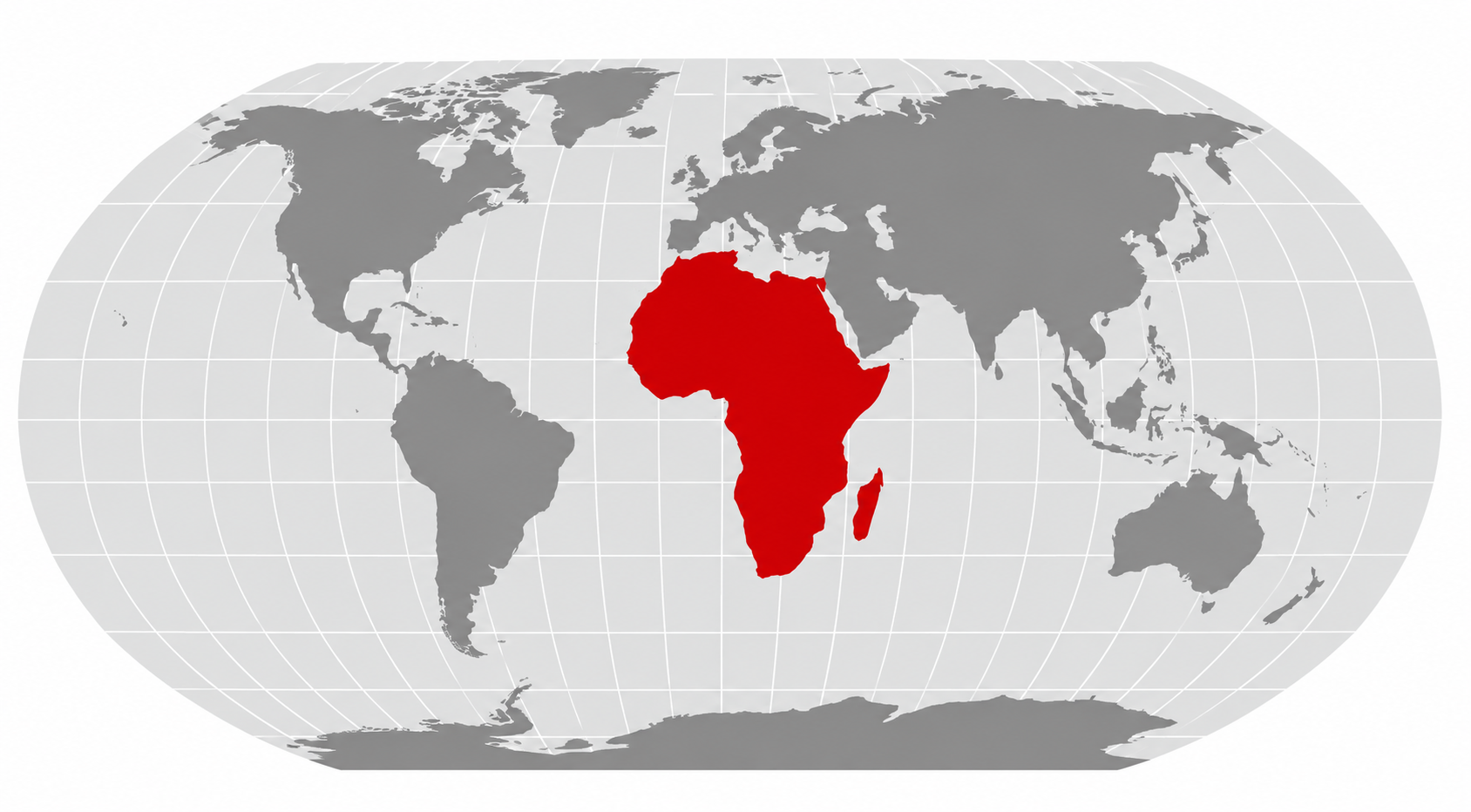

The United States stood alone Friday as the only country to vote against a United Nations resolution encouraging the use of world maps that more accurately depict the size of Africa and other regions near the equator.
The U.N. General Assembly adopted the “Correct the Map” resolution Sept. 4 by a vote of 164-1, with six countries abstaining, according to reports from The Independent, BBC and The Hill. The non-binding measure, led by Togo and backed by African Union members, calls for wider use of the Equal Earth projection and other equal-area maps when the comparative size of continents matters.
The resolution does not ban the traditional Mercator projection, which has been widely used for centuries.
Developed by Flemish cartographer Gerardus Mercator in 1569, the Mercator projection was designed to aid navigation. However, the map increasingly distorts the size of landmasses farther from the equator, making northern regions appear substantially larger while areas near the equator appear smaller, BBC reported.
Africa provides one of the most striking examples. The Mercator projection can make Africa and Greenland appear similar in size, although Africa is actually about 14 times larger than Greenland, according to BBC and The Independent.
The Equal Earth projection was created by a team of cartographers in 2018 to more accurately preserve the relative sizes of land areas. The African Union’s 54 member states adopted the projection earlier this year, according to BBC.
The resolution encourages governments, schools, international organizations and technology companies to use Equal Earth or other equal-area projections in appropriate settings, The Independent reported.
Supporters say the issue extends beyond geography, arguing that distorted maps can influence how people perceive Africa’s size, importance and potential.
“A map is never neutral,” Togolese Foreign Minister Robert Dussey said during a U.N. briefing, according to The Independent. “It shapes perceptions, influences how the place of peoples and continents in the world is understood.”
Dussey said African nations are not seeking special treatment, but a more accurate representation of the continent.
The United States was the only nation to oppose the resolution. U.S. officials characterized the initiative as promoting an ideological agenda and distracting from more pressing international issues.
