



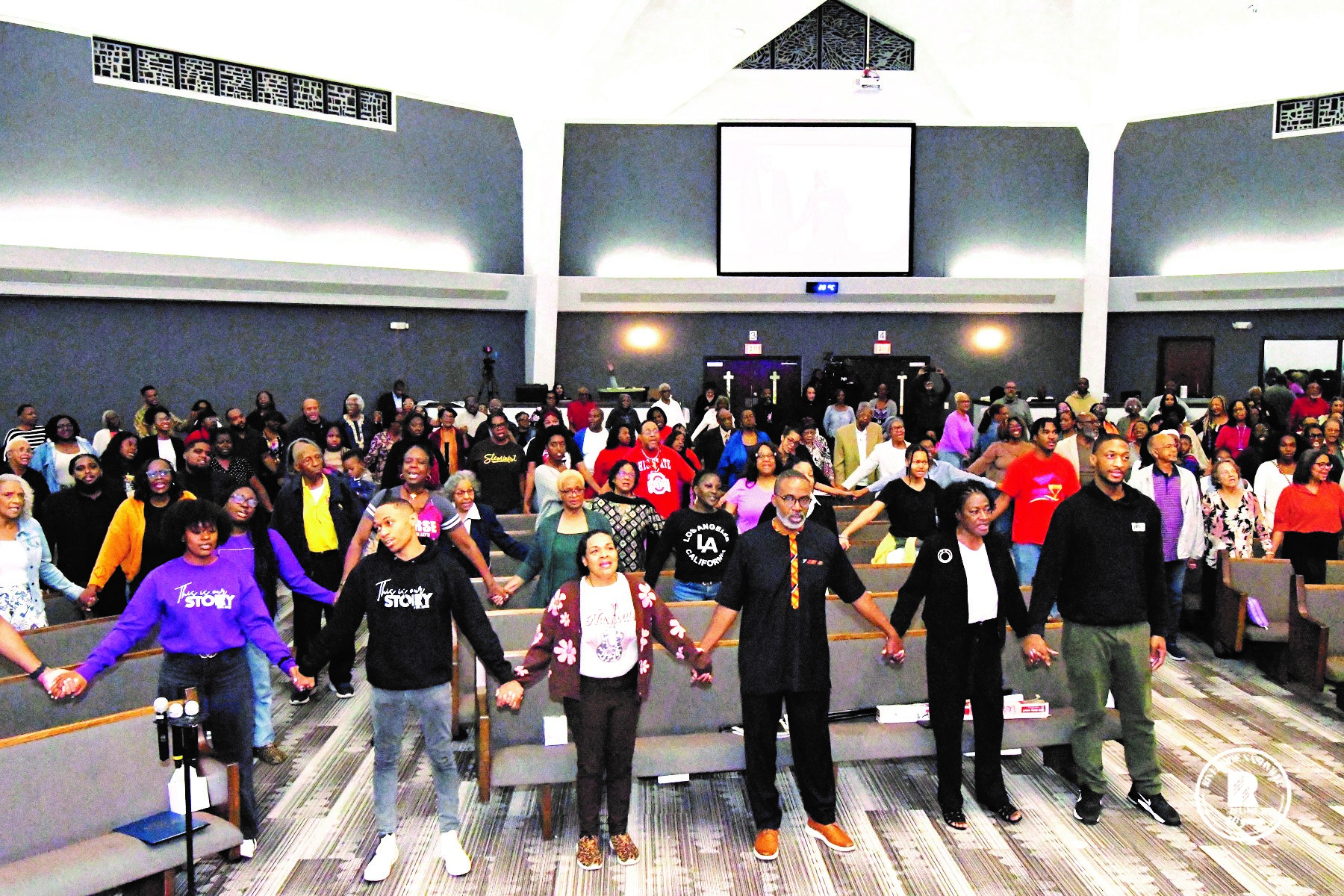
NASHVILLE, TN — Hundreds of people returned to Riverside Chapel in Nashville, Oct. 10-12 to partake in the celebration of the church’s 80th anniversary. The church has a combined 300 years of service in healthcare, education and spiritual outreach.
The three-day event – themed, This Is Our Story – included an old-fashioned AYS/MV program, a spirit-filled Sabbath worship service where past pastors were recognized, a celebration dinner, a musical gala, and a 5K run/walk. But probably the most enjoyable occurrence was the reconnection of people who hadn’t seen each other in years.
“It really is enjoyable … to connect with people that you had a shared history with,” said Furman Fordham, who once pastored Riverside Chapel for 14 years and was recently voted president-elect of the South Central Conference of Seventh-day Adventists. “Over 80 years, there are people that are communities within a community and they’re all excited to just reconnect.”
Bennie Thompson, director of the Riverside Historical Society and the lead organizer of the celebration, agreed.
“A spirit of joy seemed to permeate the whole event,” Thompson said. “You see people you haven’t seen in so long and you just hug them. One person told me, ‘I’m so glad the Riverside Historical Society did this; it’s a taste of heaven,’ a symbol of what it will feel like ‘when we all get together.’”
Another highlight of the celebration was remembrance of the Riverside Sanitarium and Hospital, a Black Seventh-day Adventist medical institution that played a critical role in community healthcare. The first day of the event, there was an exhibition at the Charles and Etta Dudley Foundation that reflected on the history of RSH, as well as the involvement of Black Adventists in the civil rights movement, such as the Poor People’s March in Washington, D.C., in 1968.
Founded in 1927 on the banks of the Cumberland River, RSH provided modern healthcare primarily to African Americans in the Nashville area who were facing discrimination in mainstream hospitals, while simultaneously attracting physicians, nurses, and patients from across the country. It helped advance medical opportunities and was a pioneer in modern medicine.
When Riverside Sanitarium was founded by philanthropist Nellie Druillard, it operated in seven small cottages. In 1947, a four-story facility was built with 50 beds, offering medical, surgical, and obstetrical care. Then, in 1972, it was replaced with a new contemporary $3 million three-story hospital building with 150 beds.
However, financial hardship and the changing healthcare landscape would lead to the decline of RSH. By 1983, the Adventist Health System had closed the hospital, marking the end of an era for one of Nashville’s most significant medical institutions. But its significance and contributions have not been forgotten.
“The influence of Riverside Sanitarium and Hospital will ever remain alive in the minds of the many patients whose lives were touched by the healing obtained at the hospital,” Thompson said.
Including the School of Practical Nursing (1952-1974, 22 years) along with RSH (1901-1983, 82 years), the church provided 104 years of healthcare to the community. And it is continuing to do so through programs like blood drives, dental clinics, and a food bank. There’s also a garden behind the church where fresh vegetables are harvested and added to items distributed at the food bank.
Additionally, the church is educating future leaders through F.H. Jenkins Preparatory School founded in 1909 (116 years), and winning souls for Christ through spiritual growth/outreach (80 years).
“The DNA of the church is service,” said Gordon Jones, current pastor of Riverside Chapel. “And the mission of service continues to be an integral part of the mission and vision of Riverside.”
