


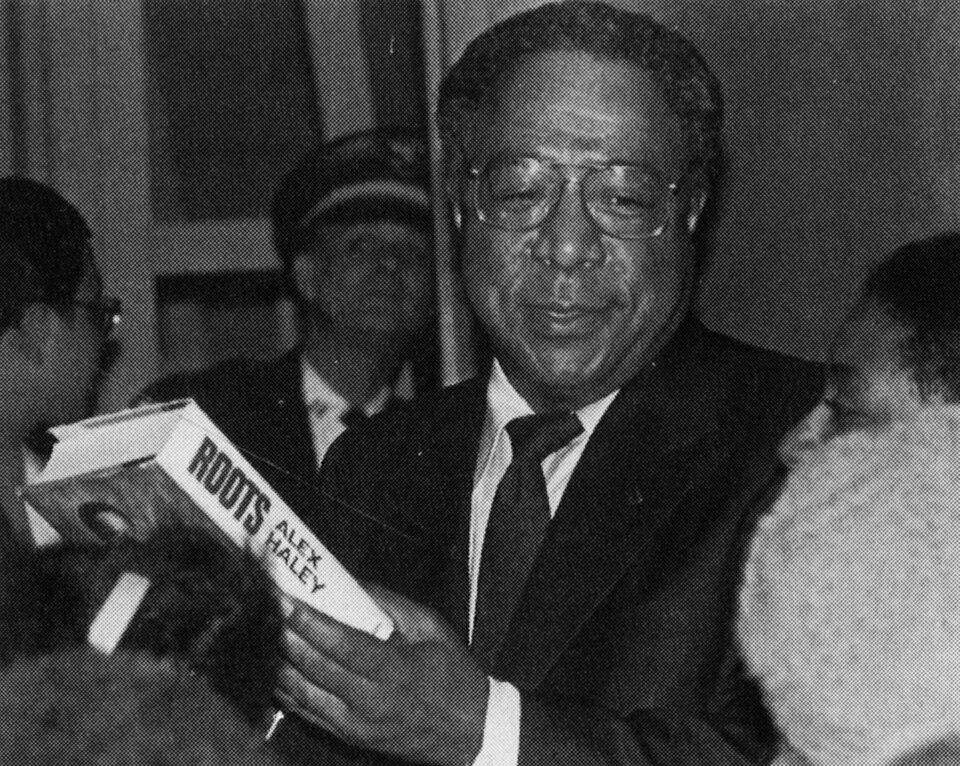

KNOXVILLE — Roots: The Saga of an American Family, the Pulitzer Prize-winning novel by Alex Haley that helped shape public understanding of slavery and inspired generations of Americans to trace their ancestry, has been banned from library shelves in Knox County Schools under Tennessee’s Age-Appropriate Materials Act.
Knox County Schools spokeswoman Carly Harrington confirmed the district recently added Roots to its list of banned books after the work was reviewed under Tennessee’s 2022 law, which broadly prohibits school library materials containing nudity, sexual abuse, sexual content or “excessive violence.”
“As a district, we recognize the immense cultural and historical significance of Alex Haley’s Roots to our nation, to Tennessee, and particularly to the county seat of Knoxville,” Harrington said in a statement. “The decision made to remove Roots from school libraries is in no way a commentary on the literary or cultural value of the novel, but the result of adherence to state law.”
Harrington said the book was elevated to the district’s review committee after concerns were raised about a passage in the novel’s 84th chapter, which the committee determined was not “age appropriate” under Tennessee law.
“Broader themes or historical significance of a work as a whole is not a consideration under the law,” Harrington said.
She said all Knox County school librarians have been trained on the law and are expected to incorporate its standards into collection review and management processes. Concerns can be raised by staff, students or parents, though Harrington said the district does not track or document the original source of Age-Appropriate Materials Act concerns.
The district’s decision means Roots can still be taught in classrooms but can no longer be available on school library shelves.
First published in 1976, Roots tells the story of Kunta Kinte, an African man taken from The Gambia and sold into slavery in America, chronicling six generations of his descendants in the United States through Haley himself. The novel won the Pulitzer Prize and was later adapted into a groundbreaking 1977 ABC miniseries watched by an estimated 130 million viewers, becoming a cultural phenomenon that transformed public understanding of slavery, Black American identity and genealogy.
Haley’s connection to Tennessee runs deep. His family’s roots are in Henning, the small West Tennessee town where he spent part of his childhood listening to family stories on the front porch that would later inspire Roots. Haley also spent some of his final years at a farm he loved in Clinton, near Knoxville. In Knoxville, his legacy is honored at Haley Heritage Square, where a towering statue of the author sits with a book in his lap atop Morningside Park.
The origins of Roots began while Haley was still writing The Autobiography of Malcolm X. In 1964, he pitched his publisher on a book tracing his family’s history back to Africa. Armed with only the misspelled name “Kunta Kintay” and fragments of an unfamiliar African language, Haley began a yearslong journey through libraries and historical records in search of his ancestry.
Alex Haley’s grandson, Bill Haley, co-founder of the Inherited Roots Project, sharply criticized Knox County’s decision.
“My grandfather famously said: ‘I think one of the most fascinating things you can do after you learn about your own people is to study something about the history and culture of other people,’” Bill Haley said.
“If a book like Roots depicting my family’s multigenerational journey through our nation’s uncomfortable history of slavery may be offensive to some readers, then why not ban another American classic, Adventures of Huckleberry Finn, which some readers may find offensive.”
