


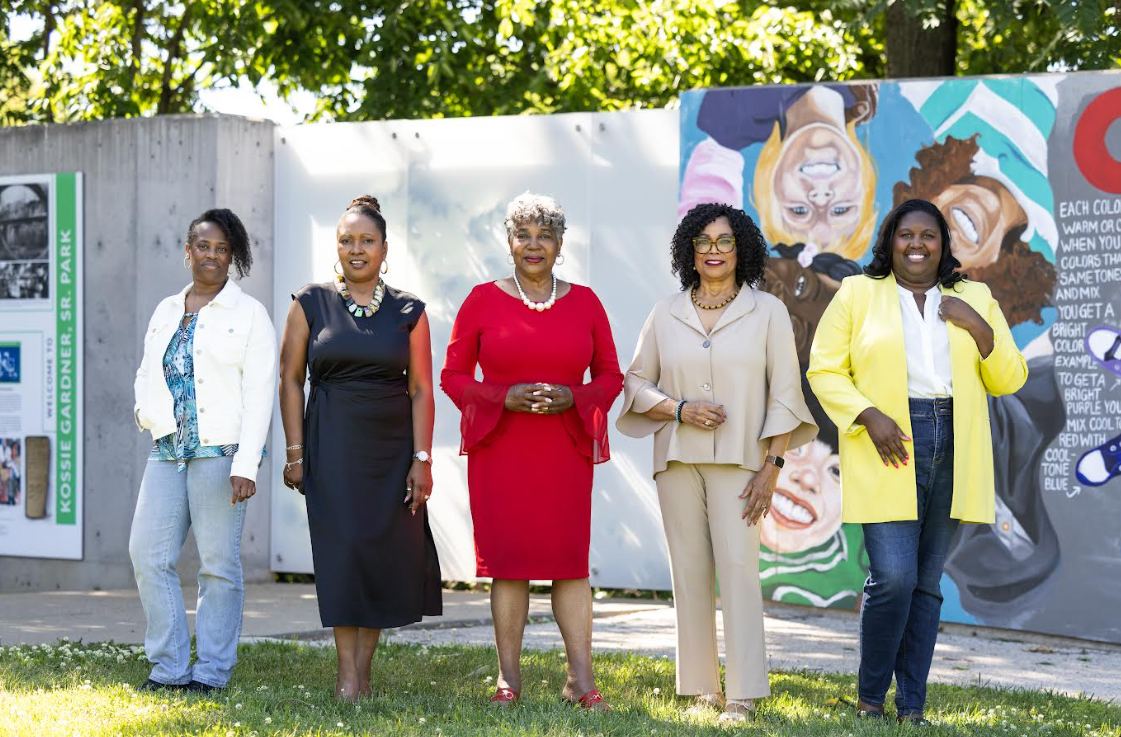

NASHVILLE, TN — As skyscrapers and cranes dominate Nashville’s core, there are a number of unique legacy projects under way that will revitalize the city’s cultural corridors.
Being spearheaded by Black women leaders, inspired by both the deep legacy and visible transitions taking place within historically Black communities, the project explores how revitalization can occur without cultural erasure.
One development, the Jubilee Bridge Area Revitalization Project (JBAR) is a community centered initiative in North Nashville that seeks to preserve and honor the cultural and historical identity of the area while helping reimagine its future through thoughtful development.
“This is a multi-site vision that includes updating the Jubilee Bridge, named in honor of the world-renowned Fisk Jubilee Singers, to reflect its location as a gateway between Midtown and the historic Jefferson Street corridor that’s home to three of Nashville’s HBCUs (Historically Black Colleges and Universities) and other landmarks,” said Fathiyah Suso, founder and director of the World AfriCultural Community Project and coordinator of the JBAR project. “This bridge is more than concrete and mortar; just like the community, it’s a symbol of excellence in many areas.”
Among the community leaders spearheading projects are Janice Woodard, president of the Clark United Methodist Church Community Development Corporation; Carlina Bell, executive director of the William Franklin Buchanan Community Development Corporation; Jennifer Horne, chief executive officer of Urban Campus and Core; and Monchiere Holmes-Jones, president of the Jefferson Street Historical Society.
“Jefferson Street is one of America’s most historically significant Black cultural corridors, and this is the latest effort to preserve and protect its legacy,” said Holmes-Jones. “All the partners involved understand that communities deserve more than buildings. They deserve environments that create opportunities for dignity, ownership, economic mobility, cultural continuity, tourism and quality of life.”
Holmes-Jones also serves as developer and owner’s representative for Elevate North Nashville, where she is helping shape transformative mixed-use and housing projects designed to serve both current and future residents. The developments focus not only on affordable and attainable housing, but also on holistic placemaking – integrating walkability, green space, wellness centered environments, parks, gathering spaces, and culturally reflective design into the future of the neighborhood.
Longtime Jefferson Street business owner Rosetta Miller-Perry, publisher of the Tennessee Tribune, welcomes the new developments. “Some may think of development as outside individuals and groups doing something in ‘our’ community; however, the women involved in these projects show the reality of what we can do ourselves. They’re proof that nothing is too good for North Nashville.”
With so many projects currently under way, residents and visitors will be able to see the corridors’ enhancements in the very near future. Retired State Senator Brenda Gilmore, a major supporter of these projects and a member of the Elevate North Nashville board, sees an impact far beyond the city of Nashville.
“By merging cultural economics, preservation strategy, and community first urban development, this project is helping position Jefferson Street and North Nashville as national examples of how historical Black corridors can evolve without losing the people, stories, and culture that made them matter in the first place.
