

Close Menu
    Facebook X (Twitter) Instagram
    • Home
    • About Us
    • Digital Subscription
    • Advertisement
    • Contact Us
    Facebook X (Twitter) Instagram
    The Tennessee TribuneThe Tennessee Tribune
    Advertise With Us
    • Home
      • COVID-19 Resource Center
        • Dr. Henry Louis Gates’ PSA Radio
      • Featured
    • News
      • State
      • Local
      • National/International News
      • Global
      • Business
        • Commentary
        • Finance
        • Local Business
      • Investigative Stories
        • Affordable Housing
        • DCS Investigation
        • Gentrification
    • Editorial
      • National Politics
      • Local News
      • Local Editorial
      • Political Editorial
      • Editorial Cartoons
      • Cycle of Shame
    • Community
      • History
      • Tennessee
        • Chattanooga
        • Clarksville
        • Knoxville
        • Memphis
      • Public Notices
      • Women
        • Let’s Talk with Ms. June
    • Education
      • College
        • American Baptist College
        • Belmont University
        • Fisk
        • HBCU
        • Meharry
        • MTSU
        • University of Tennessee
        • TSU
        • Vanderbilt
      • Elementary
      • High School
    • Lifestyle
      • Art
      • Auto
      • Tribune Travel
      • Entertainment
        • 5 Questions With
        • Books
        • Events
        • Film Review
        • Local Entertainment
      • Family
      • Food
        • Drinks
      • Health & Wellness
      • Home & Garden
      • Featured Books
    • Religion
      • National Religion
      • Local Religion
      • Obituaries
        • National Obituaries
        • Local Obituaries
      • Faith Commentary
    • Sports
      • MLB
        • Sounds
      • NBA
      • NCAA
      • NFL
        • Predators
        • Titans
      • NHL
      • Other Sports
      • Golf
      • Professional Sports
      • Sports Commentary
      • Metro Sports
    • Media
      • Video
      • Photo Galleries
      • Take 10
      • Trending With The Tribune
    • Classified
    • Obituaries
      • Local Obituaries
      • National Obituaries
    The Tennessee TribuneThe Tennessee Tribune
    National/International News

    Locust Swarms Destroy Crops, Threaten Livelihoods In Kenya

    zenger.newsBy zenger.newsApril 6, 2021No Comments4 Mins Read
    Facebook Twitter LinkedIn Telegram Pinterest Tumblr Reddit Email
    Share
    Facebook Twitter LinkedIn Pinterest Email

    For more than a year, swarms of locusts in Kenya’s arid and semi-arid north have threatened the livelihood of crop and livestock farmers already suffering during an ongoing drought.

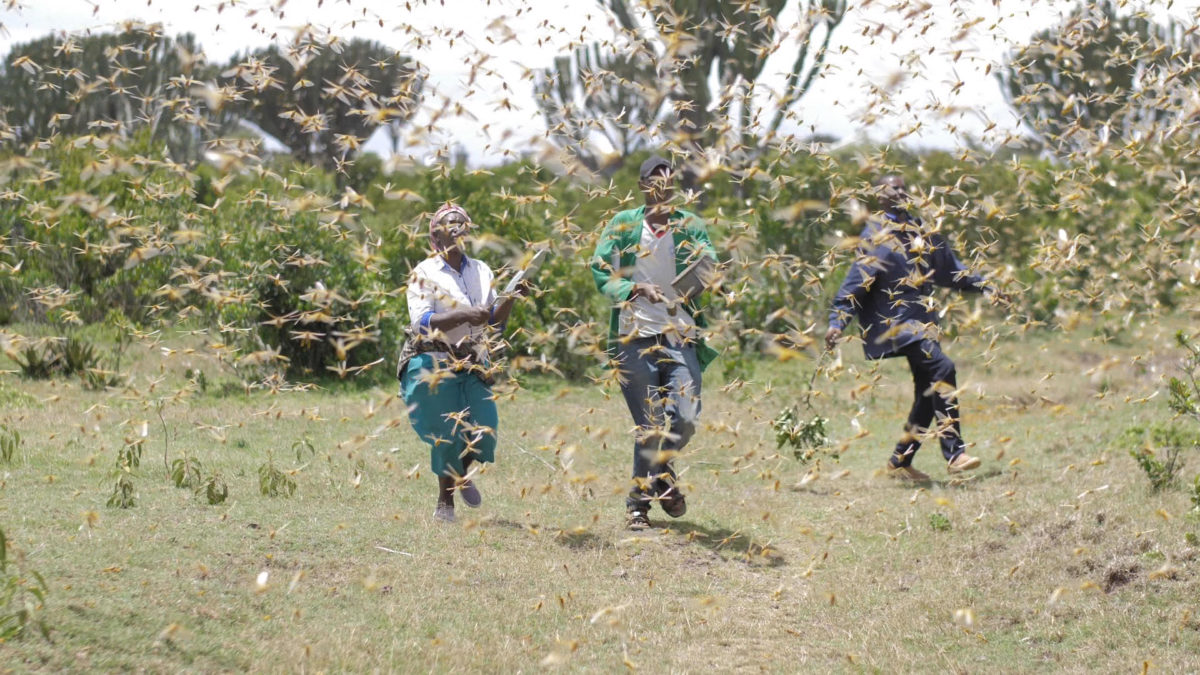
    Locust swarms tore across more than one-quarter of the country’s 47 counties, destroying vegetation in pastures, as well as crops.

    “When they landed on the trees, they started eating the leaves, and it didn’t worry us. But when they touched the ground, they ate all the vegetation that was pasture, leaving our livestock starved,” Remungezi, a herder in Marsabit, a county that borders Ethiopia to the north, told Zenger News.

    Like some of his fellow herders, Remungezi had to sell livestock, so he could buy medicine to save his other animals, which had developed health complications after grazing in fields where the locusts had laid eggs.
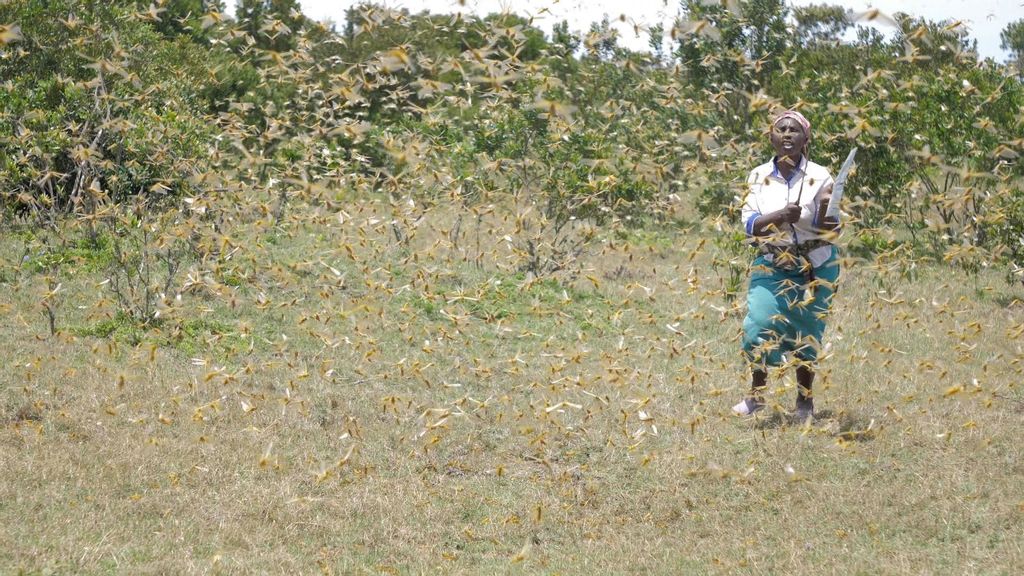
    A woman chases locusts that invaded her farm in northern Kenya. (Charles Karis)

    During the first wave of the locust invasion, the government, the Food and Agriculture Organization of the United Nations, known as FAO, and faith-based organizations joined in efforts to control the invasion amid the COVID-19 restrictions.

    Combined with a significant economic downturn during the pandemic, the locust invasion — the worst in East Africa in a quarter-century — poses an unprecedented threat to food security.

    “Depleted pasture is a big concern for the humanitarian partners working in arid counties, such as Marsabit. Competition over pasture has been one of the main causes of conflict among pastoralists,” Felix Musonyi, emergency coordinator at World Vision, a Christian humanitarian organization, told Zenger news.

    Already, more than 31 million people are facing some degree of hunger due to drought, sporadic flooding and conflict in East Africa, according to FAO.

    The locusts began swarming into East Africa in mid-2019, one of the wettest years, which provided thriving conditions for their reproduction. The insects made landfall after being carried by the winds across the Red Sea.

    “We had our first swarm of locusts toward the end of December 2019, which came through Moyale and North Horr, affecting croplands, pasture areas and the browsers in totality,” said Hassan Charfi, deputy director of agriculture for Marsabit county. “They will cause feed and food insecurity in totality in our county.”

    He said 24,000 hectares (59,000 acres) of land has been affected to date in Marsabit county, with a projection of over 60,000 hectares (148,000) of pasture to be affected if the locusts remain.

    Advertisement

    “Lack of pasture for the animals means less milk for the family,” said Remungezi. “I have had to sell goats for me to buy milk for my children.” He said that his biggest worry is starvation and malnutrition for the children in the region.

    Locust swarms tore across more than a quarter of Kenya’s 47 counties, destroying vegetation in pastures as well as crops. (Charles Karis)

    The FAO said widespread rains in late March 2020 allowed the new swarms to mostly stay in place, mature and lay eggs. Some groups of locusts moved from Kenya to Uganda, South Sudan and Ethiopia.

    Professor Baldwyn Torto, principal scientist and head of the behavioral and chemical ecology unit at the  International Centre for Insect Physiology and Ecology, told Zenger News that regional and multi-institutional coordinated efforts to reduce the risk of locust invasions is key to curbing the devastation.

    “The relevant stakeholders need to work closely with scientists to identify breeding sites and act as quick as possible to control juveniles as they emerge,” said Torto.

    Last year the desert locusts in Kenya were described as the worst swarm in 70 years.

    According to the FAO, “A 1 km² size swarm contains about 40 million locusts, which eat the same amount of food in one day as about 35,000 people, 20 camels or six elephants.”

    (Edited by Judith Isacoff and Fern Siegel)


    The post Locust Swarms Destroy Crops, Threaten Livelihoods In Kenya appeared first on Zenger News.

    Share. Facebook Twitter Pinterest LinkedIn Tumblr Email
    zenger.news
    • Website

    Related Posts

    IN MEMORIAM: Eternal Salute to The Reverend Dr. Jesse L. Jackson, Sr.

    February 24, 2026

    Civil Rights Leader Rev. Jesse Jackson Dies at 84 After Lengthy Illness

    February 17, 2026

    Barbados – PM Mia Mottley Sweeps to Victory in Elections, Third Time

    February 16, 2026

    Black Homeownership Rate Drops to Lowest Level Since 2021

    January 19, 2026

    Jack and Jill of America, Inc. Honors Dr. Martin Luther King Jr.’s Legacy With 100,000-Hour National Service Commitment to Address Food Insecurity

    January 18, 2026

    USPS Honors Poet Phillis Wheatley With Black Heritage Stamp

    January 18, 2026

    Comments are closed.

    Advertisement
    https://www.youtube.com/watch?v=IZODr-6rxyI
    Business

    Republic Bank Announces New Inclusion and Diversity Lead in Human Resources

    February 21, 2026

    Rolled 4 Ever Ice Cream – Turning Ice Cream Into an Experience

    February 13, 2026

    Taziki’s Mediterranean Café Brings Fresh Fare and Hiring Opportunities to Murfreesboro

    February 4, 2026
    1 2 3 … 398 Next
    Education
    Education

    National mental health ambassador talks to students at Tennessee universities

    By Lucas JohnsonFebruary 26, 2026

    The newest ambassador for Active Minds, the nation’s leading nonprofit organization dedicated to mobilizing youth…

    MTSU students uncover hidden hazards in historic Victorian-era books in Special Collections

    February 18, 2026

    McDonald’s Black and Positively Golden Scholarship Program to Award $1 Million to HBCU Students

    February 16, 2026

    MNPS Launches AI Storytelling Pilot Program with Lumi Founder Colin Kaepernick

    January 22, 2026
    The Tennessee Tribune
    Facebook X (Twitter) Instagram
    • About Us
    • Digital Subscription
    • Store
    • Advertise With Us
    • Contact
    © 2026 The Tennessee Tribune - Site Designed by No Regret Media.

    Type above and press Enter to search. Press Esc to cancel.