


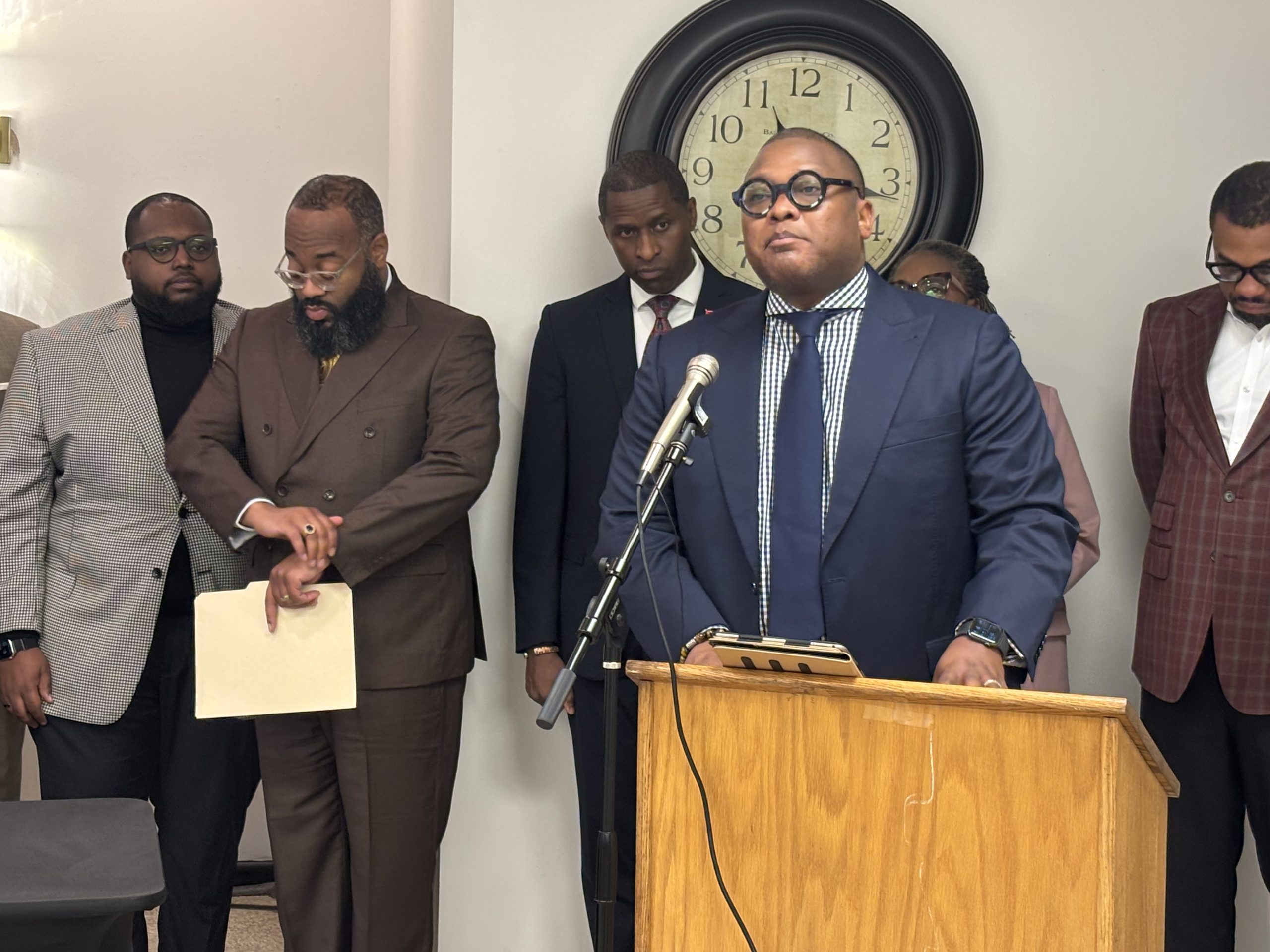

NASHVILLE, Tenn. — Clergy leaders from across Tennessee gathered Monday at First Baptist Church Capitol Hill to voice concerns about the potential impact of recently passed federal legislation they say could disproportionately affect low-income and marginalized communities.
The press conference, organized by the African American Clergy Collective of Tennessee (AACCT), brought together ministers from several cities who spoke about how the legislation — referred to by some critics as the “Big Ugly Bill,” though officially called the “Big Beautiful Bill” — could affect access to food assistance, health care and tax policies for Tennesseans.
Among those delivering remarks were Rev. Michael McNair of First A.M.E. Zion Church in Knoxville, Rev. Andre Marble of Jefferson Street Baptist Church in Nashville, Rev. Dr. Judy Cummings of Temple Church in Nashville and Rev. J. Lawrence Turner of Mississippi Boulevard Christian Church in Memphis.
Speakers said they are particularly concerned about the bill’s potential effects on Supplemental Nutrition Assistance Program (SNAP) benefits, health care coverage and tax burdens for residents in rural and underserved communities. They noted that Black Tennesseans, along with elderly and disabled residents, could face disproportionate challenges if safety-net programs are reduced.
Clergy members framed their response in moral and faith-based terms, arguing that public policy should reflect values of fairness and care for the most vulnerable.
Following the press conference, AACCT leaders announced plans to mobilize congregations across the state to increase civic engagement ahead of the upcoming midterm election season. Organizers said churches will encourage congregants to become more informed about legislation and participate in the democratic process.
Members of the clergy collective said they intend to rally faith leaders and communities statewide to speak out about policies they believe contribute to economic and social disparities in Tennessee.
The group also emphasized that its advocacy efforts will focus on promoting social justice principles and encouraging Tennesseans to work toward what they described as a more equitable society.
