


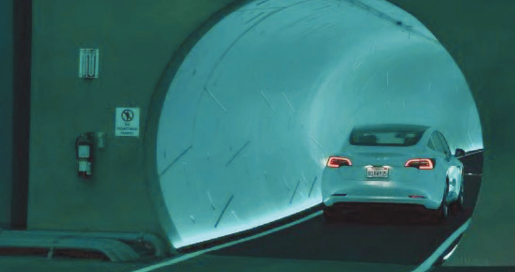
NASHVILLE, TN— Tennessee could see the creation of a new department, the Subterranean Transportation Infrastructure Coordination Authority, with the expressed purpose of overseeing and fast-tracking tunnel-based transit projects. The proposal comes after the highly controversial Music City Loop, or “Big Dumb Hole,” as some critics call it, continues to face passionate community push-back even after breaking ground, resulting in delays. If approved, the new department’s authority would take effect in July and immediately affect the speed and efficiency of projects like the Music City Loop, something some critics do not see as a victory for the average Tennessean.
Concerns critics have raised include oversight, state control, and the long-term costs of the department. Long-term cost concerns come despite the proposed authority being reduced from employing 20 people to a total of 3. The smaller staff would also be overseen by a 12-member board, made up of 9 voting members and 3 ex officio (non-voting) members. However, despite the significant size reduction, critics still note that the state would still be spending $500,000 in the Subterranean Transportation Infrastructure Coordination Authorities’ first year, and $850,000 annual in later years. Though supporters say the proposed plan addresses concerns regarding taxpayer cost, detractors also question how taxpayer interests will be properly advocated for. Residents of Jefferson Street, which is also home to The Tennessee Tribune, for example, still have many unanswered questions about details of the Music City Loop and how it could impact daily life. Boring Company representatives, as well as many state and local officials close to the Loop, have continued to keep their lips tight around the project.
These factors have caused many critics to question whether a streamlined process, which was founded after the announcement of, and not so subtly in the large interest of, the Music City Loop, is a good thing. Coverage and details around the Music City Loop have lacked satisfactory transparency for the public ever since the project was announced, and the project has often been accused of ignoring proper legal channels. Critics have said that favoritism by state and local officials towards big outside companies, especially towards both big tech and Boring Company’s founder, Elon Musk, is why the Music City Loop has been allowed to go ahead.

Many on Jefferson Street remember what happened in the not-too-distant past, when the rights and interests of everyday citizens belonging to a vibrant community were not represented during transportation construction. Concerned residents remember when the construction of I-40 demolished 100 blocks of their community, and displaced over 1,400 successful residents and businesses in North Nashville, something that was called a “historic wrong” by former Mayor John Cooper during his time in office. Just on Jefferson Street, the construction caused the demolition of 626 homes, 128 businesses, and 16 blocks of the street itself. Residents whose homes survived still saw their neighborhoods demolished and had to learn how to navigate being cut off from each other. Meanwhile, once-booming businesses saw themselves surrounded by shut-down streets and without the lifeblood of communal support that had led to their great previous success.
Many residents during the construction of I-40 had many of the same complaints that are being raised today regarding the Music City Loop. These complaints include accusations that the construction is a form of racial discrimination, in that its negative effects will be primarily felt in less affluent areas made up of economic minorities, particularly Black residents. Without systems in place that promise legal advocacy or ramifications, critics question what guaranteed safeguards are in place to ensure we do not have another “historic wrong.”
Copyright TNTRIBUNE 2026. All rights reserved.
