



Sunday, Spain captured its second World Cup title after a dramatic 1-0 extra-time victory over Argentina. But La Roja’s victory was only one part of a tournament defined by historic goals, underdog runs, cultural celebrations and political controversy.
La Roja’s second World Cup title provided the final image of a tournament that stretched across the United States, Mexico and Canada. Over more than a month, established stars strengthened their legacies, emerging players introduced themselves to the world and several countries experienced unforgettable firsts.
The tournament also demonstrated that the World Cup is never exclusively about the football or soccer. Immigration policy, race, national identity, music and politics shaped the experience just as much as the matches.
10. Curaçao scores its first World Cup goal
In the 21st minute of its third group-stage match against Germany, Livano Comenencia gave the Caribbean nation a historic moment by scoring its first World Cup goal.
Curaçao eventually lost 7-1, but the result did not diminish the significance of the occasion. Comenencia’s goal allowed the Blue Wave to make a proud statement on the sport’s biggest stage in Houston.
For the players and supporters, it was a reminder that World Cup history is not written only by the teams that lift the trophy.
9. Yoane Wissa delivers for DR Congo
The Democratic Republic of Congo had not appeared at a World Cup since 1974, when the country competed as Zaire. That team was eliminated without scoring a goal.
Wissa scored shortly before halftime to tie the match at 1.
The goal announced DR Congo’s return to the World Cup and gave a new generation of Congolese fans a moment of its own.
8. Lamine Yamal makes Spanish history
Lamine Yamal entered the World Cup as one of the game’s brightest young stars. It did not take long for him to justify the attention. Against Saudi Arabia in Atlanta, Yamal slid toward the back post and scored the first of Spain’s three first-half goals. At 18 years and 343 days old, he became the youngest Spanish player to score in a World Cup, surpassing the record Gavi set in 2022. The goal was another milestone in Yamal’s rapid rise and an early indication that Spain possessed the talent, depth and fearlessness required to win the tournament.
7. Erling Haaland becomes a World Cup phenomenon
Haaland scored twice against Iraq, Senegal and Brazil on his way to finishing the tournament with seven goals. Although Norway rested him against group winner France, Haaland remained among the World Cup’s leading scorers. His performances established him as a major World Cup star, but his personality attracted almost as much attention as his play.
Haaland documented his travels across the United States through candid Snapchat videos and Instagram posts. He celebrated victories with supporters, offered viewers a behind-the-scenes look at Norway’s campaign and even traveled home with a taxidermied raccoon. The memes were constant, his social media following surged and millions of supporters discovered a playful side of one of the world’s most intimidating strikers.
6. Atlanta’s FIFA Fan Festival becomes a global party
Yes, I live in Atlanta. No, that does not make this selection biased.
Ludacris, Jermaine Dupri, Davido and Belly Gang Kushington were among the performers who energized the crowd. The main attraction, however, was the football.
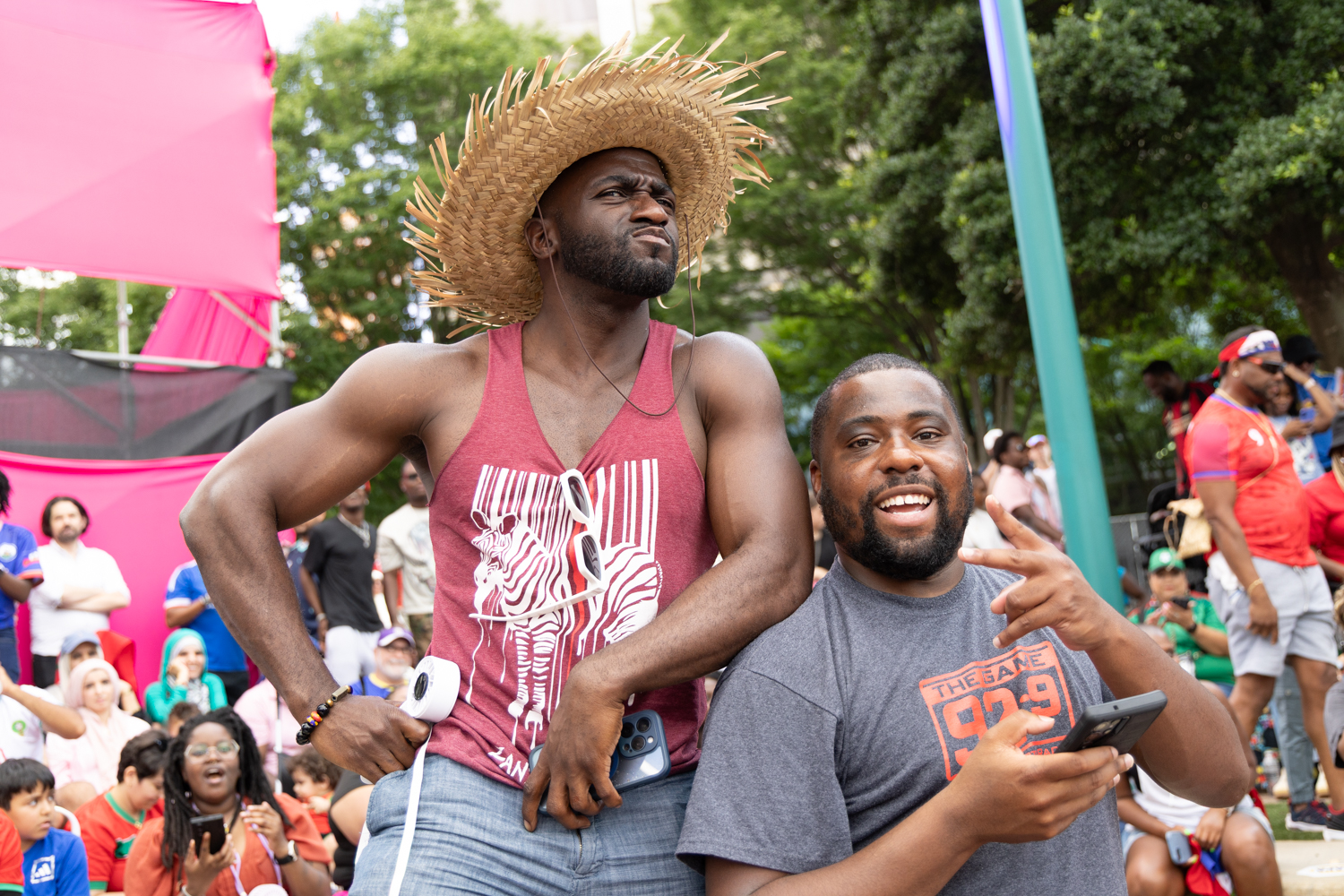
Supporters from nearly every corner of the world watched matches on a seven-story screen. They celebrated together, argued over refereeing decisions and experienced the joy, tension and heartbreak that make the World Cup different from every other sporting event.
Atlanta did not simply host the World Cup. The city created a cultural experience around it.

5. Jude Bellingham answers his critics
In November 2025, Daily Mail journalist Craig Hope described him as a “divisive soloist” and the “elephant in the room.” The criticism fueled a broader debate about Bellingham’s role with England and whether the country was prepared to embrace a young Black star as the face of the Three Lions.
Bellingham answered those questions on the field.
He scored seven goals during the tournament, including two in England’s pivotal match against Mexico at Estadio Azteca. He finished as the World Cup’s highest-scoring midfielder and became England’s most important attacking player.
Bellingham rose above the criticism and the racial tropes directed at him. His performances also brought him a new group of admirers, including plenty of Black women who celebrated his success across social media.
Hey Jude, that is captain material!
4. Cristiano Ronaldo’s World Cup farewell
Ronaldo could not produce one final goal to save Portugal, but he achieved an important personal milestone earlier in the tournament. During Portugal’s round-of-32 victory over Croatia, Ronaldo scored the first knockout-stage World Cup goal of his career.
He left the tournament as Portugal’s all-time leading scorer and one of the most accomplished players in football history. Ronaldo never lifted the World Cup, but his longevity, scoring records and influence on Portugal’s national team remain undeniable.
The loss to Spain marked the final chapter of a World Cup journey that began two decades earlier.
3. U.S. travel restrictions affect the World Cup
The World Cup was promoted as a global celebration, but many supporters, relatives and officials encountered significant barriers while attempting to enter the United States.
Julien Kouadio Adonis, a representative of Ivory Coast’s National Committee for the Support of the Elephants, described the restrictions as discriminatory.
“It’s a form of segregation that doesn’t dare speak its name, but the proof is there,” he said. “No European country has faced this kind of restriction. Why Africa?”
In May, the United States announced that it would remove a requirement for deposits of as much as $15,000 from travelers representing several World Cup-qualifying nations, including Algeria, Cabo Verde, Ivory Coast, Senegal and Tunisia. Applicants still needed valid World Cup tickets.
The earlier requirement prevented some relatives from completing the visa process in time.
The mother of Cabo Verde goalkeeper Vozinha was unable to attend her son’s opening match against Spain in Atlanta. U.S. House Minority Leader Hakeem Jeffries wrote to the State Department seeking assistance.
Somali referee Omar Artan also was denied entry into the United States before the tournament. Artan, widely regarded as one of Africa’s leading referees, returned to Somalia after being turned away upon his arrival in Miami. FIFA said he would still be paid for his scheduled World Cup assignments.
The episodes demonstrated how immigration policy can shape who is permitted to participate in what is supposed to be the world’s most inclusive sporting event.
2. Cabo Verde wins over the football world
Before June 11, many casual soccer fans could not locate Cabo Verde on a map.
By the end of the World Cup, millions knew about the Blue Sharks.
The Blue Sharks entered the tournament as one of its biggest underdogs. Reaching the knockout round already represented a historic achievement, but Cabo Verde did not arrive merely to participate. Twenty-two-year-old Sidny Lopes Cabral scored one of the tournament’s most memorable goals, stunning a heavily pro-Argentina crowd. Supporters elsewhere celebrated Cabo Verde’s courage, discipline and fearlessness.
The team’s run brought attention to Cape Verdean communities across New England, particularly in Massachusetts and Rhode Island. Children gained new sporting heroes in Vozinha and Cabral.
The World Cup also created a gateway into Cabo Verde’s music, food, Creole language, migration history and African-Portuguese identity.
By the end of the tournament, conversations no longer needed to begin with, “Where is Cabo Verde?” They could move directly into a deeper discussion about the country’s people, culture and history.
1. Argentina’s Black history receives global attention
Its history includes African slavery, Indigenous dispossession, state-supported European immigration and policies that elevated whiteness while marginalizing Afro-Argentine communities. War, disease, migration, discrimination and deliberate historical erasure all contributed to the declining visibility of Black Argentines in the country’s national narrative.
Those issues received renewed international attention during the World Cup.
Streamer IShowSpeed attended Argentina’s matches against Cabo Verde and Egypt and was subjected to racist chants from sections of the Argentine support. The incidents inspired social media creators, historians and cultural commentators to examine racism within Argentine soccer culture and the country’s complicated relationship with Black identity.
The tension intensified before Argentina’s semifinal against England in Atlanta. Federal authorities treated the match as a major security event, with more than 1,600 law enforcement personnel assigned to protect the stadium, fan areas, team hotels and transit hubs.
Lionel Messi challenged Jude Bellingham as the England midfielder entered the penalty area. Enzo Fernández repeatedly antagonized England’s players. Argentina eventually advanced to the final with a 2-1 victory.
Argentina’s conduct after losing the championship match to Spain generated even more criticism.
Broadcast footage appeared to show defender Nahuel Molina striking a Spanish player in the stomach. During another confrontation, Leandro Paredes shoved Spain defender Eric García near the throat as Argentina coach Lionel Scaloni attempted to intervene.
Argentina’s players then turned their backs as Spain received its World Cup medals.
It was a classless ending to an otherwise impressive run, and the scenes reinforced the difficult conversations that had followed Argentina throughout the tournament.
A World Cup about more than the beautiful game
It gave Curaçao and DR Congo historic goals. This World Cup introduced Cabo Verde to millions of people. It strengthened the legacies of Lamine Yamal, Jude Bellingham, Erling Haaland and Cristiano Ronaldo. Kylian Mbappé is now the all time leading scorer in the history of the World Cup with 22 goals.
It also exposed the influence of immigration policy, racism, national identity and public investment on international sports.
Governments invest heavily in their national teams and use their success to project identity, unity and power. That ensures sports and politics will always remain connected.
The 2026 World Cup provided another unforgettable example. By the way, Spain finished the tournament with seven wins, zero losses, and one draw. The only team they didn’t beat? Vozinha and Cabo Verde.

